I built Temple Studios because I already knew what the right space can do for you. My last studio was a room I'd carved out of an old, half-derelict warehouse — nobody walking past would have guessed it was in there, but inside it was calm, it was mine, and I got more done there than anywhere else. When the chance came to do it properly, from nothing, I took it.
A four-year-empty office
The unit had been a derelict office, sat empty for four years and still stuck somewhere in the 1960s. Most people would have seen a write-off. I saw a blank canvas — somewhere I could build exactly the kind of space I'd want to work in, with none of anyone else's compromises baked into the walls.
Skips full of the old place
The first job was emptying it. A solid week of skips — old desks, pipework, plasterboard, plaster, carpets, flooring, the lot. Every outdated thing in there went in the bin until it was back to bare bones and I could finally see the space for what it could be.
Planning how each room should feel
Before I built anything I planned every room out on the floor — marking where the power and the sockets would go, and, more than that, how each room should feel to stand in. Then I built it up: stud walls inside the rooms so the sound doesn't travel through the concrete, then insulate, board, plaster, decorate and floor. Room by room, in that order, until each one was real.
Self-taught, every trade
I'm not a trained builder. I never went to college for any of this — nobody taught me how to soundproof a room, wire a socket or screed a floor. I worked it out with common sense and a designer's head, and I leaned on people I trust where it counted: mates who do joinery came to help, I had plasterers in, and my dad gave me advice the whole way through. But the bulk of it I did with my own hands — joinery, electrics, decorating, screeding, flooring, skirting, doors, the security — and the vision stayed mine from start to finish. Honestly, I didn't think I'd pull it off to the spec I did.
The plywood made it Temple
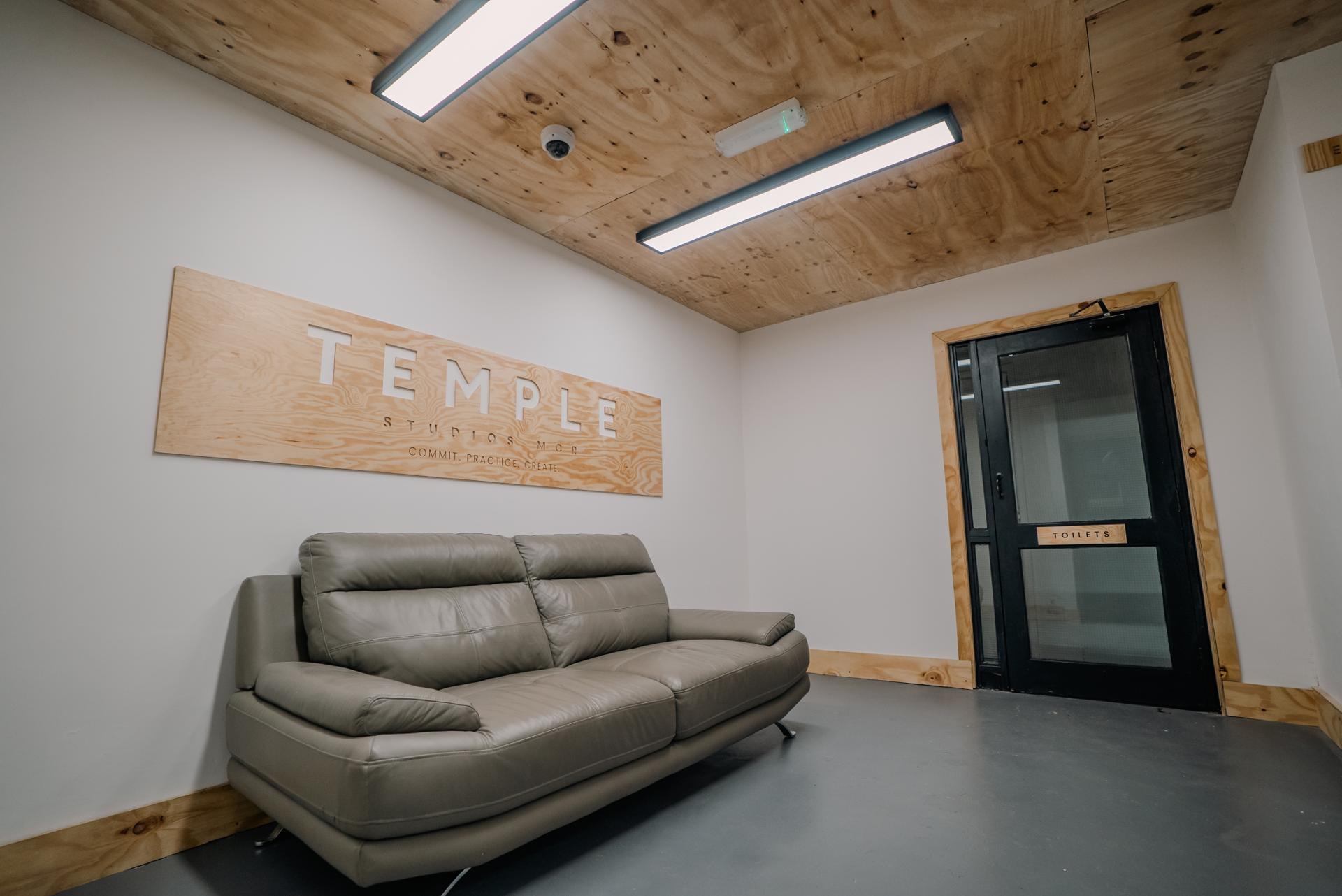
The moment it stopped being a blank canvas was the plywood. I ran Polish pine plywood across the ceilings, and the whole place found its identity. I love wood — the grain, the texture, the way the pattern actually comes alive in a finished room. Against the white walls it gives a natural but clean, industrial feel, and that's become my signature. It's the thing that makes a Temple studio look like a Temple studio.
Six rooms, and only phase one
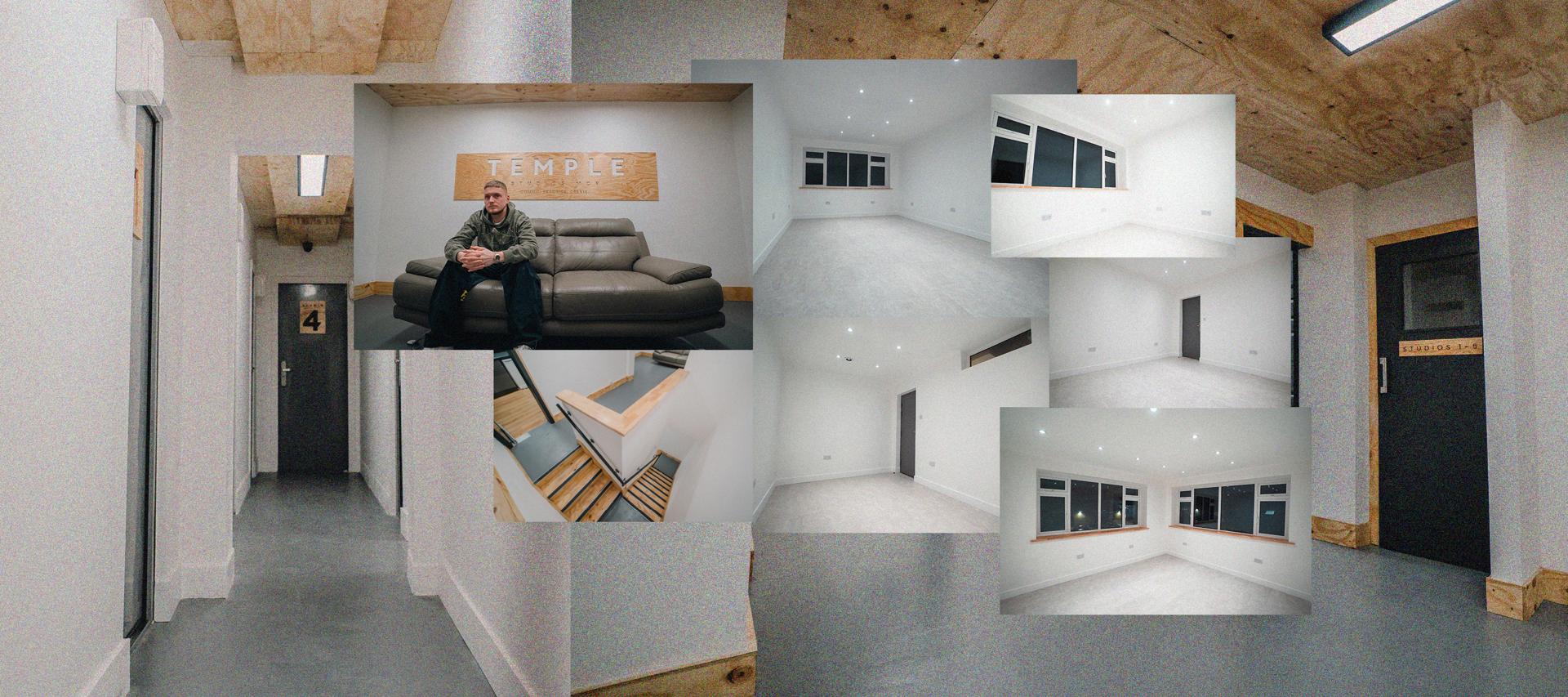
What's open now is six studios, all different sizes — the size and the price depend on what you need the room for. But this is only phase one. There's a lot more building still in me: phase two and phase three are coming over the next year, including daily and hourly rooms kitted out with proper production gear, for people who want to come in, use real equipment and take it seriously. Those will be vetted — you have to know what you're doing and respect what's in the room.
Who it's for
Right now the rooms are home to two DJ-producers, a videographer and his partner who's a DJ herself, and two university students building their own fashion brands. That mix is the whole point. Temple is for anyone serious about a creative craft — graphic designers, web developers, photographers, music producers, DJs, artists, 3D artists, anyone trying to start their own creative brand and needing a real space to do it from. If that's you, I'm here to help you make it happen.
Why Temple
Temple has been my name since I left college. It started with the house music events I was throwing back in 2018, carried through Temple Acoustics, and now it's Temple Studios. The idea behind it has never changed: somewhere to go and create, to practise your craft and take the thing you love seriously — not a desk you rent, but a space you actually belong in.
“I didn't build a desk to rent out. I built the room I always wanted to work in.”